

Camel toe, over the years, has caused both curiosity and concern for a lot of people, especially women. A lot of questions have been asked in an effort to know, understand, and embrace this fashion trend that is gradually coming to stay. One question that is asked more than the others is can women camel toe show from the rear?
No, camel toe cannot show from the rear, this is because it is an imprint of the labia, which is in the front. It cannot extend all the way to the back.
In this article, I will show you why it is not possible for camel toe to show from the rear and how to prevent unwanted outlines if they pose a concern to you.
Why It Is Not Possible to See Camel Toe from the Rear
1. Anatomical distinctions
The frontal and rear regions of a woman’s lower body have different structures. Camel toe specifically refers to the outline of the labia majora when it becomes more pronounced due to tight clothing.
In contrast, the rear doesn’t have an analogous structure that would produce a similar effect. While the back may showcase other outlines (which we will discuss later), they don’t mimic the distinct appearance of a camel toe.
2. The way clothes fit
The way clothing is designed to fit a woman’s body is another aspect to consider. Most garments, especially those made of more rigid materials, are tailored to contour the curves of the front differently than the rear. This means that even if tight, clothing is less likely to bunch up in the same way at the back as it does in the front, leading to different visual effects.
3. It depends on the fabric
Different fabrics have varied elasticity and adaptability. Some fabrics, when stretched over the frontal region, can snugly fit, highlighting the body’s natural contours. However, these same fabrics might not produce the same ‘bunching’ or ‘snugging’ effect at the rear due to the absence of structures similar to the labia majora.
4. Movement and positioning
How we move, sit, or position our bodies can accentuate or minimize clothing outlines. Due to the body’s natural front-and-back movement dynamics, fabric tends to fold or gather differently in the frontal region than in the back. This contributes further to the phenomenon of camel toe being a front-focused issue.
Wedgie vs Camel Toe
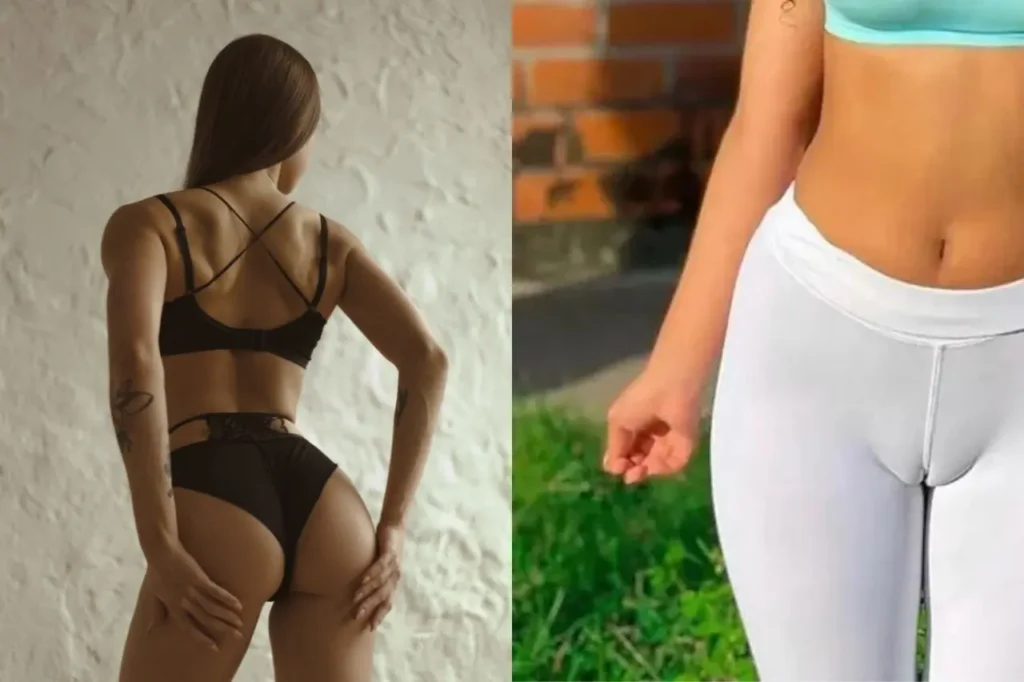
Camel toe refers to the distinct visual outline formed by tight-fitting clothing around a woman’s genital area, particularly highlighting the labia majora. It’s a frontal phenomenon. Wedgie is exclusively a rear occurrence. A wedgie happens when clothing, typically underwear, gets bunched up or lodged between the buttocks.
Camel toe is often caused by super-tight or ill-fitting clothing, especially pants, leggings, or swimsuits. While physical activity, the type or cut of the underwear (like thongs), and even certain outerwear, like tight jeans, can lead to a wedgie. Movement plays a significant part; bending, sitting, or high-impact activities can make clothing ride up at the back.
Opting for seamless underwear, using camel toe guards or liners, and ensuring pants or leggings are the right fit can help prevent this. For wedgies, choosing the right underwear style, ensuring proper fit, and occasionally opting for seamless varieties can minimize the chances of getting a wedgie.
How to Prevent Unintentional Outlines
1. Right fit and size
Understanding your body’s measurements is paramount. When clothing fits well, it reduces the chances of unintentional outlines. It’s essential to remember that sizes can vary between brands. Always trying on clothing before buying can save you from many potential fashion mishaps.
And if something doesn’t fit perfectly off the rack, consider getting it tailored. A piece that’s tailored to your measurements will not only look better but also feel more comfortable.
2. Get the right underwear
Underwear can be both the culprit and the savior when it comes to preventing unintentional outlines. Thongs might eliminate visible panty lines, but they could lead to wedgies. Seamless underwear is often a good choice to prevent both camel toe and visible lines. Additionally, high-rise or full-coverage options can offer both comfort and a smooth silhouette.
3. Material considerations
The fabric of your clothing plays a significant role in how it drapes and fits. Stretchy materials, while comfortable, can sometimes cling to the body and highlight areas you’d rather keep subtle. On the other hand, more rigid materials might not adapt to your body’s shape as easily.
Being aware of how different materials interact with your body can help in making informed choices. It’s always a good idea to opt for breathable fabrics, especially for innerwear.
4. Specialized products
The market now offers a range of products designed specifically to address common clothing concerns. Camel toe concealers, liners, and specific types of padding can prevent the formation of unsightly outlines.
5. Dressing mindfully
Being aware of how clothing fits, feels, and looks can make all the difference. Before stepping out, do a quick mirror check from various angles. Understand how your outfit behaves when you sit, stand, or move. Taking a few extra minutes to assess your outfit can save you from potential discomfort or embarrassment later.
Conclusion
Camel toe is a phenomenon exclusive to the front and cannot be seen from the rear. However, while the rear may not contend with camel toe, it has its own challenges, notably the wedgie. The good news is that with awareness and some preventive measures, these unintentional outlines can be easily managed, allowing you to step out with confidence and comfort.