

As a personal shopper, I have discovered a funny quirk that many women have in common—we never have what to wear no matter how full our closets are, and that is why we love pants. They are easy to throw on, they pair with most outfits, and to top it off, pants come in staple pieces that stay in season all year round.
However, when your favourite pair of pants starts showing camel toe, it can be kind of annoying, right? Well, we have all been there. Camel toe is a common wardrobe malfunction women experience.
This unfortunate fashion dilemma occurs when clothing, especially pants, bunches or tightens in the crotch area, resembling the shape of a camel’s toe.
Finding ways to prevent or reduce it is a common topic of discussion, and one question that often arises is whether modifying pants can be a solution. So, let’s take a deep dive into the possibilities and methods to address this issue.
Can You Modify Pants To Reduce Camel Toe?
Absolutely, there are adjustments you can make to your pants to avoid camel toe. I’ve done quite a number of clothing transformations in my day, and in this article, I am going to discuss three effective methods you can try to improve your pants and make them camel-toe-proof.
Keep in mind that while these are do-it-yourself tips, if you find them challenging, you can always consult a skilled seamstress for professional assistance.
What To Do Before Altering Your Pants
1. Identify the issue
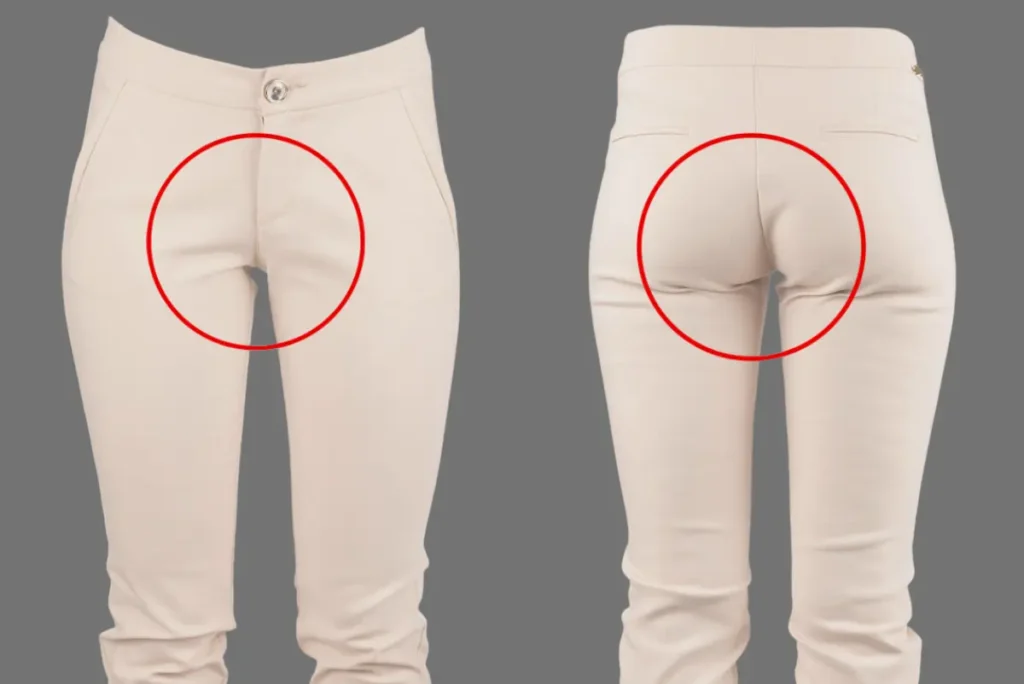
Before putting scissors on a nice pair of pants, you should first of all get to the root of the problem. This will not only help you make a clear decision, but it will also give you an idea of the particular method you will need to get rid of the camel toe.
To locate the source, wear the pants and stand in front of a full-length mirror in good lighting, feet hip-width apart. Look at the front first.
You should be looking for any tension lines that will lead you to the spot you need to adjust. Are there any drag lines along the abdomen, crotch, or thighs? Does anything feel tight or uncomfortable anywhere?
2. Keep records
Take pictures of the front, side, and back while wearing the trousers. These pictures will serve as a reference during and after the sewing process. You should also measure the length of the crotch seam, the inseam, and the side seams to write them down before you loosen it.
3. Check for allowance
Flip those pants inside out and inspect the seams for allowance. There should be about an inch left so that you can have enough wiggle room for any changes. Without the allowance, alterations could result in a fit that’s too tight, making the pants unsuitable to wear.
3 Ways To Modify Pants To Prevent Camel Toe
1. Sew in a gusset
A gusset is a piece of fabric, typically triangular or diamond-shaped, that you sew into the crotch area of the pants. Its purpose is to create more space and reduce tension, ultimately minimizing the risk of camel toe. Additionally, a gusset helps reinforce the crotch by redistributing stress points along the seam.
Steps to sew in a gusset:
- Step 1: Turn the pants inside out so you can work on the seams.
- Step 2: Using a seam ripper, loosen 2-3 inches of the inseam to make room for the gusset.
- Step 3: Measure the length and width of the open seam. Cut a fabric piece for the gusset with extra width for sewing allowance.
- Step 4: Pin the gusset fabric to the area, aligning the center of the gusset with the middle of the seam.
- Step 5: Using a sewing machine, carefully sew the fabric onto the pants, securing the seam in the camel toe area.
- Step 6: Trim any excess fabric from the gusset and seams, leaving neat ends.
- Step 7: Finish the seams with a zigzag stitch to prevent fraying.
- Step 8: Put the pants on and check for a smoother fit. Make adjustments if needed by re-sewing or trimming, then lightly press the gusset area with an iron for a clean finish.
2. Install a liner
Installing liner involves sewing a layer of breathable fabric (like cotton or linen) into the pants to strengthen and give it a less noticeable crease. This additional lining over the crotch area helps prevent the seam from digging into the delicate areas.
You can make a full lining to completely enclose the inside construction details of the pants and create a barrier. Or make a partial lining when you want to retain the lightweight quality of a particular fabric.
Steps to install a lining:
- Step 1: Rip the inseam down to the leg opening, then lay out the lining fabric and place the pants on top. Trace around the pants, leaving some seam allowance. Cut the lining fabric following the traced lines.
- Step 2: Turn the pants inside out and place them on a flat surface. Smooth out any wrinkles or folds.
- Step 3: Pin the lining fabric to the inside of the pants, aligning the edges. Pin at the seams and edges to secure it in place.
- Step 4: Sew the lining to the pants along the crotch seam, using a straight stitch. Start from the waistband and sew down to the leg seams.
- Step 5: Sew the lining to the pants along the leg seams, ensuring it’s smooth and without wrinkles. Sew from the top to the bottom of the pants.
- Step 6: Trim any excess lining fabric from the seams to reduce bulk and make the lining lie flat.
- Step 7: Finish the edges of the lining fabric with a serger, zigzag stitch, or bias tape to prevent fraying.
- Step 8: Turn the pants right side out and carefully smooth out the lining, ensuring it’s flat and not bunched up.
- Step 9: Use a low heat iron to gently press the seams, making sure the lining lays nicely inside the pants. Try on the pants to ensure the lining fits well and prevents camel toe. Make any necessary adjustments for fit and comfort.
3. Add pleats
Pleats are folds created in the fabric that add flexibility, allowing the material to go along with the body’s movements without causing tension in the crotch region. Beyond functionality, pleats also offer a stylish design element to the pants.
Steps to add pleats:
- Step 1: Mark the area with fabric chalk where you want to create pleats. Typically, start a few inches below the waistband and go down to where the camel toe tends to appear.
- Step 2: Fold the fabric at each mark to create pleats, ensuring the excess fabric is distributed evenly. Pin the pleats in place.
- Step 3: Carefully press the pleats with an iron to hold them in place and create a neat finish.
- Step 4: Sew along the top of the pleats to secure them. Start from the top and stitch down the pleat to hold it securely.
- Step 5: If needed, trim any excess fabric from the seam allowance to maintain a comfortable fit.
- Step 6: Turn the pants right-side out and try them on to ensure the fit is improved and camel toe is reduced.
Conclusion
Camel toe is a common issue, but modifying pants can be a viable solution to reduce its occurrence. Please note that there may be situations where you have to use a combination of these techniques to get your desired results.
Remember, some pants simply cannot be saved for one reason or the other so sometimes the best thing to do is just to let them go and get new ones. However, there is no harm in trying because, with the methods discussed in this post, you can make amends that can contribute to a more comfortable and flattering fit.